Key Takeaways
- Hands-on STEAM education makes complex science and math concepts incredibly fun and easy to understand!
- The benefits of hands-on learning in STEAM include massive boosts to creativity and critical thinking.
- Project-based STEAM learning teaches students how to tackle real-world challenges fearlessly.
- Engaging STEAM activities for students keep learners excited and hungry for more knowledge.
- Developing strong STEAM skills for students prepares them for the global job market!
Have you ever watched a child’s eyes light up when they finally get a science experiment to work? It is pure magic! Hands-on STEAM education transforms boring textbook theories into thrilling, real-world adventures. When students actually touch, build, and experiment, their brains make connections that simply reading cannot match. I remember setting up a simple volcano experiment for a class, and the sheer excitement in the room was contagious!
We are going to explore exactly why diving in and getting messy is the absolute best way to learn. This guide covers the incredible STEAM education benefits that help children become brilliant problem solvers. You will find fantastic tips on how to bring these interactive lessons into your own home or classroom. Get ready to discover how building robots and mixing safe chemicals prepares students for an amazing future!
The Magic of Interactive STEAM Education
Interactive STEAM education works so well because it forces students to think on their feet! Instead of memorizing facts, learners actively build, test, and redesign their own incredible projects. This active participation fires up multiple areas of the brain, making the lessons stick permanently. I always tell parents that a messy kitchen table is often the sign of a genius at work!
Learning by doing completely shifts how children view failure and mistakes. In a traditional setting, a wrong answer feels bad, but in a science experiment, it is just exciting data! They quickly learn to ask “why did that happen?” instead of getting frustrated. This resilient mindset is the true secret to developing unbreakable problem-solving skills.
Why Get Your Hands Dirty?
You absolutely must let kids build things with their own hands! The physical act of connecting wires or measuring liquids builds essential fine motor skills alongside brain power. STEAM learning methods that involve physical touch cater to visual and kinesthetic learners beautifully. Everyone gets a chance to shine when the lesson jumps off the page!
Do not worry if you do not have expensive lab equipment at home. You can create mind-blowing experiments using simple items like baking soda, cardboard, and tape. I highly recommend starting with household items because it shows kids that science exists everywhere. It makes the worldwide world of engineering feel completely accessible and welcoming!
Top STEAM Education Benefits for Growing Minds
The primary STEAM education benefits revolve around teaching kids how to think, rather than what to think. When faced with a coding bug or a collapsing bridge model, students must analyze the problem from multiple angles. This analytical thinking naturally spills over into their reading, writing, and everyday decision-making.
You will notice a huge boost in teamwork and communication skills, too! STEAM classroom activities often require students to collaborate, share resources, and listen to each other’s wild ideas. Working together to solve a complex puzzle prepares them for the collaborative nature of the international workforce.
Building Confidence Through Trial and Error
Confidence blooms the moment a child solves a problem they initially thought was impossible! I love seeing that sudden burst of pride when a student’s homemade catapult finally launches a marshmallow across the room. Project-based STEAM learning provides these frequent, tangible victories that build incredible self-esteem.
They learn that persistence always pays off in the end. When a project fails on the first try, they simply tweak their design and try again with new enthusiasm. This iterative process is how real scientists and engineers operate across the globe every single day!
Real-World Applications
Connecting classroom lessons to real-world problems makes learning deeply meaningful and urgent. When students design water filters, they learn about global clean water initiatives and environmental protection. They realize that their newly acquired skills can actually change the world for the better!
These practical applications show learners that their education has genuine value outside of school walls. STEAM skills for students become tools for creating a brighter future, rather than just subjects on a report card. It gives them a profound sense of purpose and direction.
Essential STEAM Activities for Students
Choosing the right STEAM activities for students makes all the difference in keeping their attention locked in! You want to select projects that are challenging enough to be interesting, but not so hard that they cause tears. Building simple circuits with conductive dough is an absolute favorite of mine—it is safe, squishy, and lights up!
Always connect the activity to something they already love and care about. If a student loves video games, introduce them to basic block coding so they can design their own levels. Tailoring the experience to their passions guarantees a spectacular level of engagement and joy.
Project-Based STEAM Learning in Action
Project-based STEAM learning puts the student in the driver’s seat of their own educational journey. You simply give them a goal, like “build a boat that can hold ten pennies,” and let their imagination run wild! They must research, design, build, and test their creations completely independently.
This independence fosters a deep sense of ownership over their academic success. I have found that students work twice as hard when they feel like the project belongs entirely to them. They become deeply invested in the outcome and push themselves to achieve greatness.
Fun Classroom Examples
You can easily set up a bridge-building challenge using just dry spaghetti and mini marshmallows! This classic activity teaches incredible lessons about weight distribution, geometry, and structural integrity. Plus, it is incredibly cheap and easy to clean up once the building is done.
Another fantastic idea is hosting a classroom egg drop competition from a safe height. Students must design protective containers using recycled materials to keep their egg completely safe. The excitement and suspense as each package drops is simply unforgettable!
Robotics and Coding
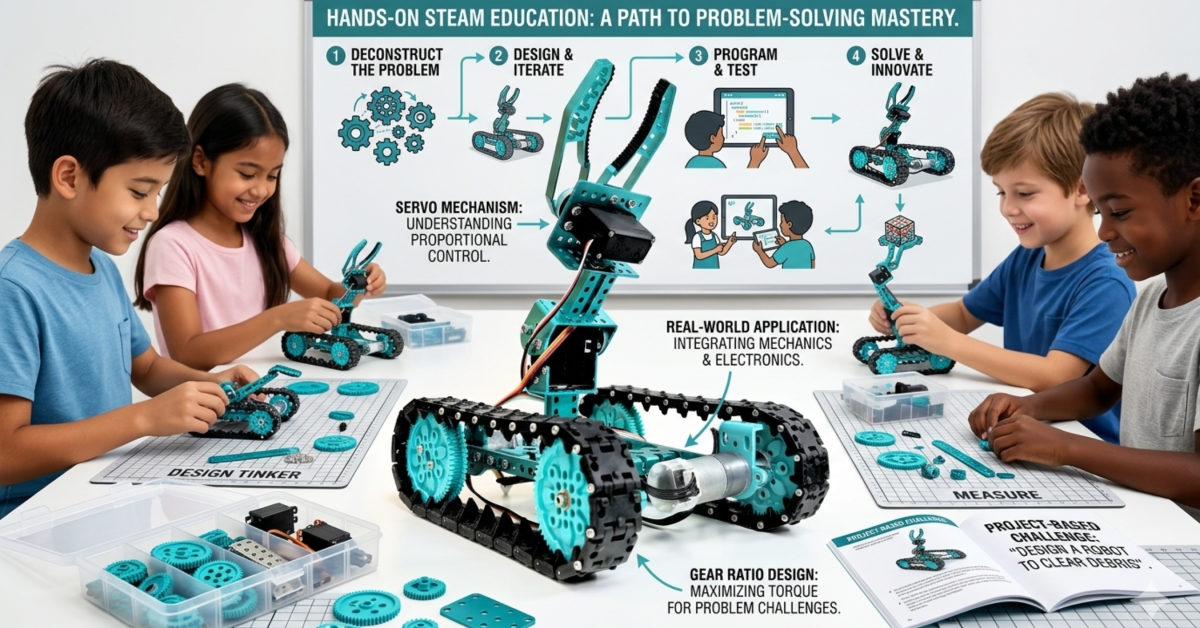
Do not be intimidated by teaching robotics and coding to young learners! There are so many wonderful, beginner-friendly kits available today that make programming feel like playing a game. Benefits of hands-on learning in STEAM become incredibly obvious when a child successfully programs a robot to navigate a maze.
These tools teach the foundations of computational thinking and precise logic. Students learn that computers only do exactly what they are told, which forces them to give incredibly clear instructions. This attention to detail is a superpower in the modern, digital future.
Expanding STEAM Skills for Students Worldwide
Developing strong STEAM skills for students guarantees they are ready for the jobs of tomorrow. We are preparing children for careers that might not even exist yet, which is incredibly exciting! Teaching them adaptable problem-solving techniques ensures they can handle any technological shift.
Technology connects us all on a massive, global scale like never before. A student practicing coding in their bedroom can collaborate with peers across the international community. This worldwide connection brings diverse perspectives to local problem-solving challenges.
A Global Approach to Education
Many countries now recognize that interactive learning is vital for their economic future. Schools worldwide are replacing rote memorization with dynamic, hands-on maker spaces. This shift ensures that the next generation grows up curious, capable, and ready to innovate.
You can bring this global mindset into your own home by exploring international science fairs online. Seeing what other kids are building around the world is incredibly inspiring and motivating! It shows students that they are part of a massive, worldwide community of young creators.
Effective STEAM Learning Methods
The most effective STEAM learning methods always prioritize curiosity over getting the “right” answer. You must encourage students to ask weird, wonderful questions and then help them find the tools to investigate. When I let my students guide the lesson with their own questions, the energy in the room completely shifts!
Make sure you mix different scientific disciplines together for the best results. Combine art with math by exploring symmetry, or mix engineering with biology by building bird feeders. This cross-pollination of subjects mimics how real-world problems actually require multiple types of knowledge.
Bringing STEAM Classroom Activities to Life
To make STEAM classroom activities truly pop, you need to create a welcoming, high-energy environment! Play some upbeat music during building time and celebrate every little victory with a high-five. The classroom should feel like an exciting laboratory where anything is absolutely possible.
Always leave plenty of time at the end of an activity for reflection and sharing. Ask the students to explain their thought process and what they would do differently next time. This verbal processing cements the problem-solving skills they just practiced and builds fantastic public speaking confidence!
Conclusion
Diving into hands-on STEAM education is the absolute best way to build confident, capable problem solvers! By letting kids build, fail, and try again, we equip them with the resilience needed for a brilliant future. The excitement of a successful experiment creates a lifelong love of learning that traditional textbooks simply cannot match.
I strongly encourage you to try one messy, fun science experiment with your students or kids this week! Grab some baking soda, find some cardboard, and watch their amazing minds go to work. The world needs their creativity, so let’s give them the tools to start building tomorrow, today!
Author Bio
Maker and Coder
Maker and Coder is a passionate technology educator dedicated to making programming and science accessible to everyone! With years of experience teaching digital literacy and engineering to an international audience, they specialize in breaking down complex topics into thrilling, hands-on activities. Maker and Coder truly believes that every child has the potential to build a brighter future through curiosity and play!