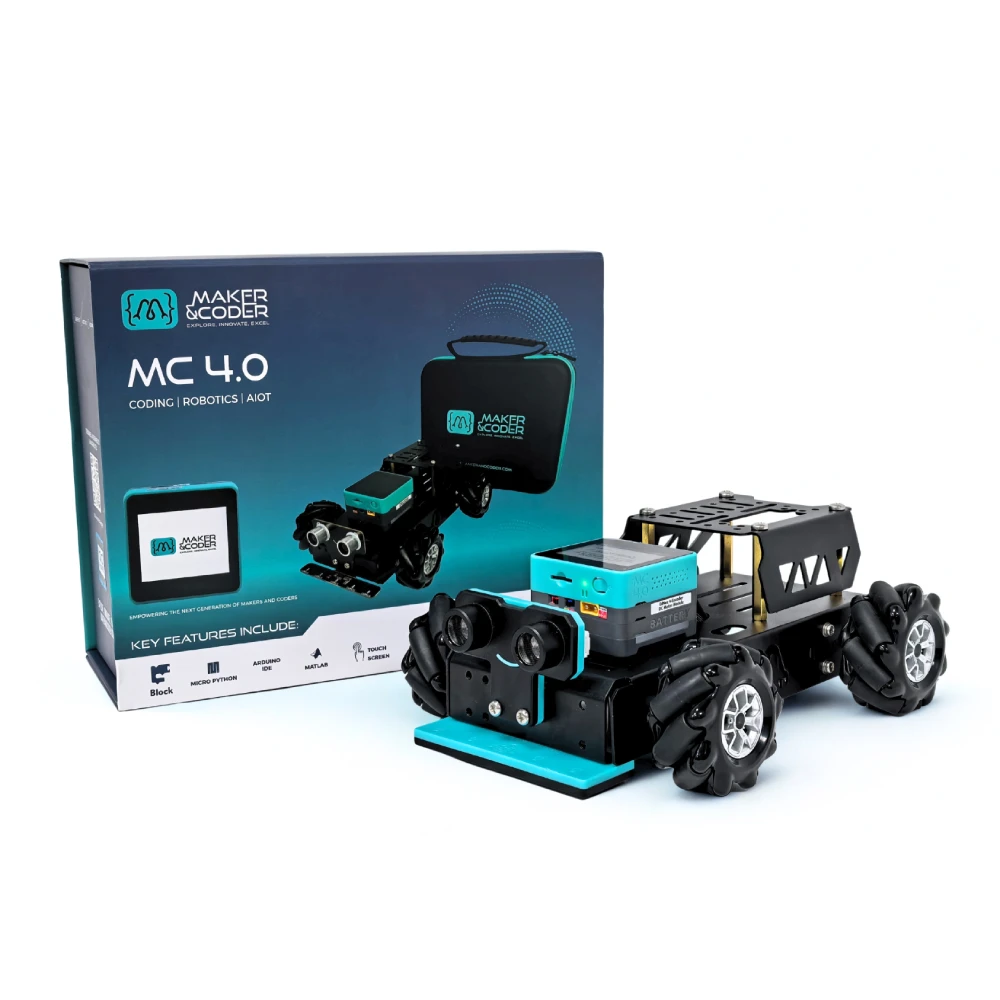
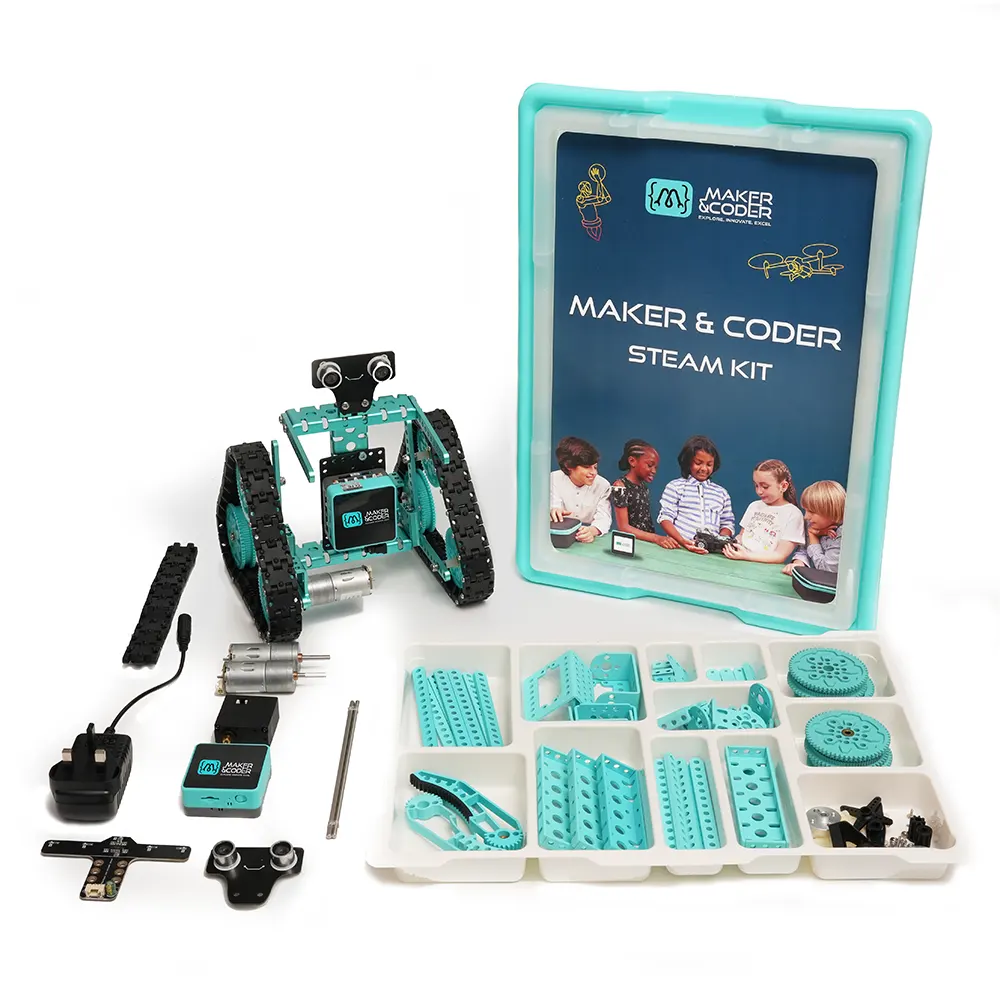
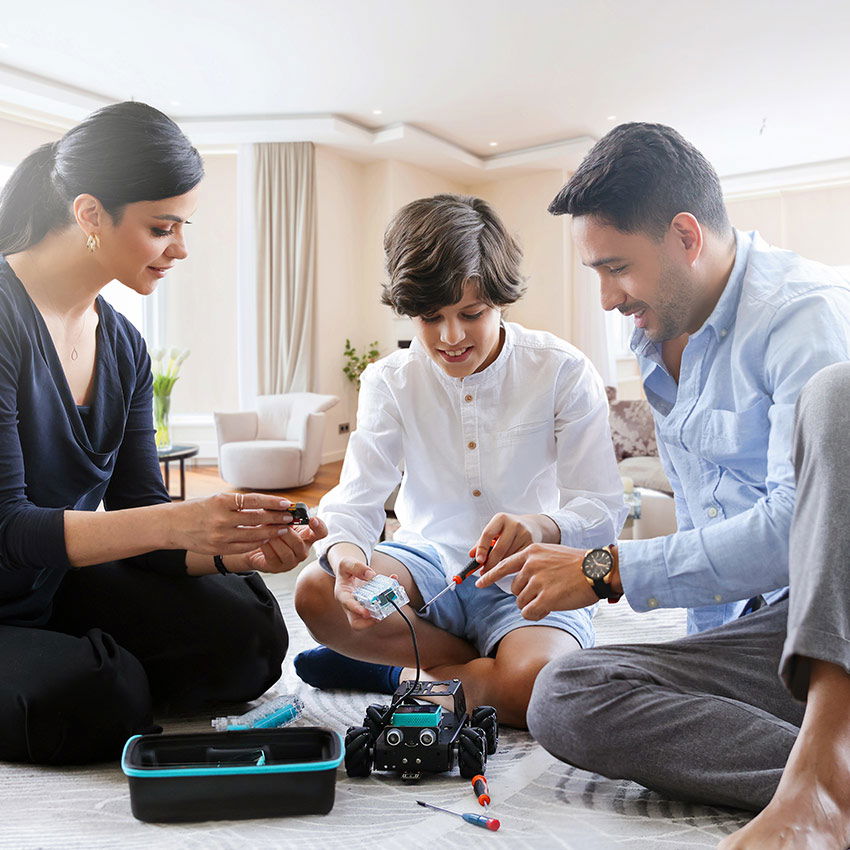
Spark curiosity and unleash creativity in your students with our complete classroom robotics kit made for top-notch education. These kits work great for kids aged 8-12 and teens 13-17. They serve as learning tools to connect book knowledge with real-world practice.
Each robotics class pack has key parts that bring STEM ideas to life:
Precise motors to create movement
Smart sensors to interact with surroundings
Easy-to-use microcontrollers to program logic
Flexible building blocks to construct creations
A simple programming interface that helps every student learn to code
See your students change from sitting back to taking charge, as they create everything from basic moving robots to machines that solve tricky problems. Our kits help kids think work together, and understand technology—skills they’ll need for jobs in the future.
Our products work for all ages. You can teach young kids simple coding ideas or give teenagers tough robot projects to tackle. Maker & Coder gives you the tools to create amazing learning moments.
These robotics kits have a design that makes them tough easy to scale up, and simple to roll out in classrooms. They come with several units, parts you can swap out, and projects that line up with school plans.
You bet — a lot of kits come with guides for teachers ready-made lesson ideas, outlines for projects, and ways to fit in with STEM goals to help teachers use them in class.
The number of students who can use a kit varies based on its size and the modules it contains. Many robotics kits are designed for groups, like pairs or small teams, and extra packs allow more students to join in.
Yes. Most school robotics kits can accommodate additional sensors, modules, and advanced parts. This allows the setup to expand as students become more proficient.
They support visual programming with blocks, which works well for newcomers. As students advance, they can move on to text-based languages such as Python and C++.
You’ll find access to resources for teacher training, video guides, help with technical issues, discussion boards for the community, and fresh updates to teaching materials.