The world is rapidly changing, driven by advancements in Artificial Intelligence (AI), robotics, and the Internet of Things (IoT). To thrive in this new landscape, students need a skill set that goes beyond traditional academic knowledge. Developing these future skills for students is crucial for preparing them for jobs that may not even exist yet.
This guide outlines the essential competencies students must cultivate. We will explore the critical blend of technical know-how and uniquely human abilities that will define success. From digital literacy to emotional intelligence, these are the future-ready skills that will empower the next generation.
Why Today’s Education Must Evolve for Tomorrow’s World
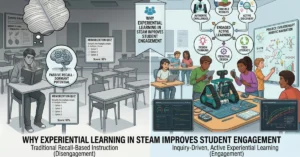
Traditional education models are struggling to keep pace with technological disruption. The rise of AI and automation means that many routine tasks will be handled by machines, making certain skills obsolete while creating a high demand for others. Education must shift its focus from rote memorization to fostering adaptable, creative, and critical thinkers.
The future of learning worldwide depends on this evolution. Schools and educators have a responsibility to equip students with the tools they need to navigate a complex, interconnected, and technology-driven society. This requires a new emphasis on 21st century skills that integrate technology with human ingenuity.
The Core Shift: From Knowing to Doing
The most significant change is the move away from simply acquiring information. With knowledge instantly accessible, the value lies in what you can do with it. This means prioritizing project-based learning, problem-solving, and hands-on experiences that build practical technology skills for students.
- Adaptability: The ability to learn, unlearn, and relearn is paramount.
- Application: Students must be able to apply theoretical knowledge to solve real-world problems.
- Collaboration: Working effectively with others, including AI-powered tools, is essential.
1. Digital Literacy and Computational Thinking
Digital literacy is the foundational future skill for students. It’s more than just knowing how to use a computer; it’s about understanding how digital systems work, evaluating online information critically, and using technology safely and ethically.
Alongside this, computational thinking is a problem-solving process. It involves breaking down complex problems into smaller, manageable parts, recognizing patterns, and designing algorithmic solutions. These are core principles behind all AI and robotics education.
Key Components of Digital Literacy
- Information Veracity: Distinguishing between credible and false information online.
- Digital Citizenship: Understanding the rights, responsibilities, and etiquette of online interaction.
- Cybersecurity Awareness: Protecting personal data and recognizing digital threats.
Developing Computational Thinking
Students can build these skills by engaging in coding activities, robotics projects, and data analysis tasks. They learn to think logically and systematically, a crucial skill for interacting with the automated systems of the future.
2. Advanced STEAM and Technical Proficiency
A deep understanding of Science, Technology, Engineering, and Mathematics (STEAM) remains critical. However, the focus is shifting towards integrated STEAM skills for the future. Students need to understand how these disciplines intersect and apply them to innovate.
Proficiency in specific technologies is also becoming non-negotiable. This includes a foundational understanding of AI concepts, data science principles, and how IoT devices communicate. These technical abilities are what employers will look for to fill high-demand roles.
Essential Technical Competencies
- Data Analysis: The ability to collect, interpret, and make decisions based on data.
- AI and Machine Learning Concepts: Understanding how algorithms are trained and used to make predictions.
- Robotics and Automation: Grasping the mechanics and programming behind automated systems.
Hands-on learning through kits and projects, like those from Maker and Coder, provides a practical pathway to mastering these complex skills needed in the age of AI.
3. Creativity and Innovation
As machines handle routine and analytical tasks, human creativity becomes a more valuable asset. The ability to imagine, create, and innovate will be a key differentiator in the future workforce. It’s the engine for developing new products, services, and solutions to global challenges.
Fostering creativity in the classroom means encouraging experimentation and embracing failure as a learning opportunity. It involves giving students the freedom to explore unconventional ideas and blend art with technology—the “A” in STEAM.
Cultivating an Innovative Mindset
- Curiosity: Encouraging students to ask “what if?” and explore their interests deeply.
- Design Thinking: Using a human-centered approach to solve problems with empathy and iterative prototyping.
- Interdisciplinary Projects: Combining subjects like art and engineering to spark novel ideas.
4. Critical Thinking and Complex Problem-Solving
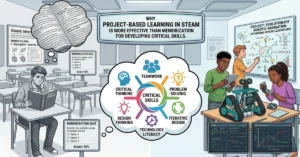
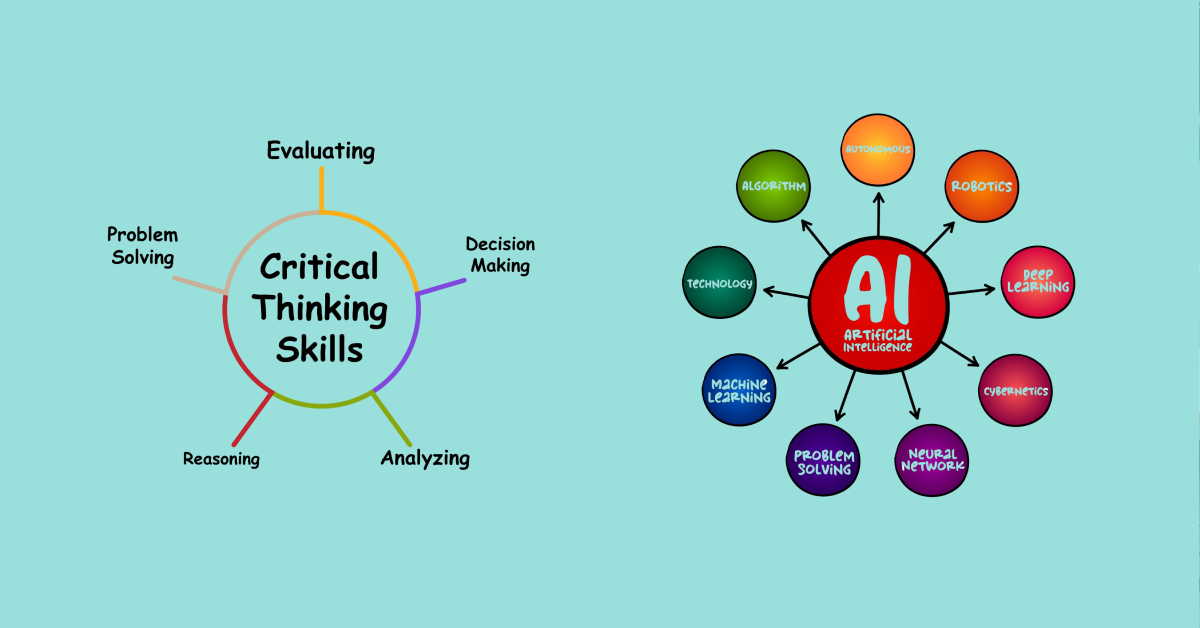
The ability to analyze information objectively and solve multifaceted problems is a timeless skill that is more important than ever. In a world saturated with data and misinformation, critical thinkers can cut through the noise to make sound judgments.
Complex problem-solving involves identifying the core issues within a complicated situation, evaluating potential solutions, and implementing the most effective one. This skill is essential for tackling challenges in fields from climate change to public health.
Steps to Build Problem-Solving Skills
- Define the Problem: Clearly articulate the challenge without making assumptions.
- Gather Information: Collect relevant data from multiple, reliable sources.
- Brainstorm Solutions: Generate a wide range of potential answers, no matter how unconventional.
- Evaluate and Select: Analyze the pros and cons of each option and choose the best path forward.
- Implement and Iterate: Put the solution into action and be prepared to adjust based on the results.
5. Emotional Intelligence and Collaboration
While technical skills are crucial, human-centric skills like emotional intelligence (EQ) and collaboration are what will set people apart from machines. EQ is the ability to understand and manage your own emotions and recognize and influence the emotions of others.
Collaboration is the skill of working effectively within a team to achieve a shared goal. As projects become more complex and global, the ability to communicate clearly, empathize with colleagues, and navigate group dynamics is indispensable. This is a primary focus for building future skills worldwide.
The Pillars of Emotional Intelligence
- Self-Awareness: Knowing your strengths, weaknesses, and emotional triggers.
- Self-Regulation: Controlling impulses and managing your emotional state.
- Empathy: Understanding and sharing the feelings of others.
- Social Skills: Building rapport and managing relationships effectively.
These “soft skills” are the bedrock of effective leadership, teamwork, and customer relations—areas where the human touch remains irreplaceable.
Frequently Asked Questions (FAQ)
The most important future skills for students are a blend of technical and human competencies. Key skills include digital literacy, computational thinking, creativity, critical thinking, complex problem-solving, and emotional intelligence. This combination ensures students are both tech-savvy and adaptable.
Schools can prepare students by integrating AI and robotics education into the curriculum. This should involve project-based learning that teaches coding, data analysis, and ethical AI principles. The focus must shift from memorization to fostering creativity, critical thinking, and collaboration.
Soft skills are crucial because they are uniquely human abilities that AI cannot easily replicate. Skills like empathy, communication, and collaboration are essential for teamwork, leadership, and innovation. As AI handles more analytical tasks, these human-centric skills will become a primary differentiator in the workforce.
Students should begin developing 21st century skills as early as elementary school. Foundational concepts like digital citizenship, basic computational thinking, and collaborative problem-solving can be introduced through age-appropriate activities and play, building a strong base for more advanced learning later on.
Yes, STEAM skills for the future are more relevant than ever. AI, robotics, and IoT are all built on STEAM principles. However, the focus is expanding to include an understanding of how these technologies are designed, deployed, and managed ethically. Students need strong STEAM foundations to innovate and work with these advanced systems.