Education is undergoing a profound transformation. The traditional classroom model is evolving to meet the demands of a world driven by technology and innovation. At the heart of this change lies the future of STEM education—a future being actively shaped by robotics, Artificial Intelligence (AI), and the Internet of Things (IoT). For school owners, educators, and policymakers, understanding these global STEM education trends is no longer optional; it is essential for preparing students to thrive in the era of Industry 4.0.
This article explores how these groundbreaking technologies are revolutionizing learning environments across the globe. We will examine the practical applications of robotics, AI, and IoT in classrooms and discuss why integrating them into a modern robotics curriculum for schools is crucial for developing the next generation of innovators.
The Dawn of Industry 4.0 and the Urgent Need for STEM Skills
We are living through the Fourth Industrial Revolution, or Industry 4.0, characterized by the fusion of the physical, digital, and biological worlds. Automation, data exchange, and smart technologies are reshaping every sector of the global economy. This rapid shift has created a significant global STEM skills gap. Occupations that require expertise in science, technology, engineering, and mathematics are growing at an unprecedented rate, yet the supply of qualified talent is struggling to keep pace.
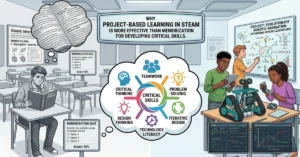
The challenge for education systems worldwide is to bridge this gap. It requires a fundamental move away from rote memorization and toward the cultivation of 21st-century skills: critical thinking, creativity, collaboration, and computational thinking. Smart classrooms and advanced technology in classrooms are the primary vehicles for delivering this new educational paradigm. By embracing Industry 4.0 education, we empower students not just to consume technology, but to become its creators and masters.
Robotics in Education: Building the Next Generation of Engineers
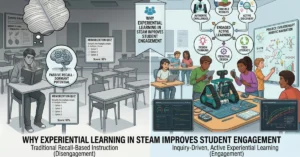
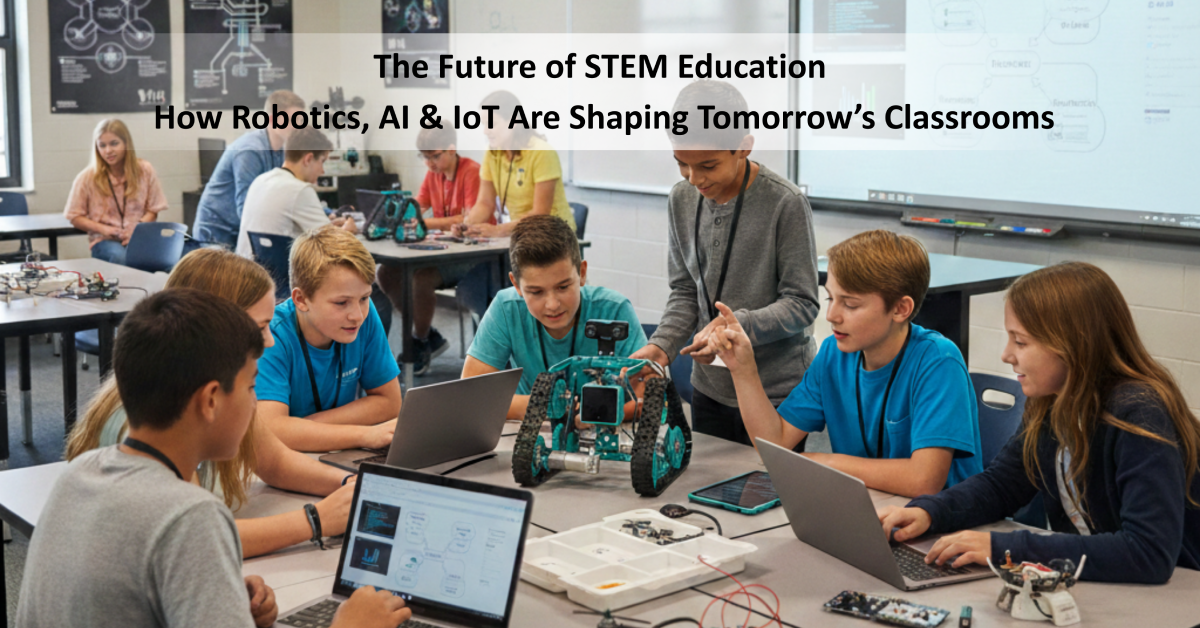
Robotics is one of the most powerful tools for bringing abstract STEM concepts to life. When students build and program a robot, they are not just learning to code; they are engaging in a hands-on, multidisciplinary learning experience that encompasses mechanical engineering, electronics, and problem-solving. This is the essence of the maker culture—learning by doing.
From Theory to Tangible Creation
A well-designed robotics curriculum for schools transforms the learning process from passive to active. Instead of simply reading about physics principles, students can see them in action as they design a robot to navigate a maze or lift an object. This hands-on approach makes complex ideas more intuitive and memorable. The benefits of robotics in education are clear:
Deepens Conceptual Understanding: Students apply mathematical and scientific principles in a practical context, solidifying their knowledge.
Fosters Problem-Solving Skills: Debugging a robot that isn’t working correctly teaches resilience, logical reasoning, and iterative improvement.
Encourages Collaboration: Group robotics projects require students to communicate effectively, delegate tasks, and work together toward a common goal.
Makerandcoder is committed to fostering this hands-on approach, providing accessible robotics kits that allow students of all ages to design, build, and program. We believe that giving students the tools to create is the first step toward inspiring a lifelong passion for engineering and innovation.
AI in Education: Personalizing Learning at Scale
Artificial Intelligence is no longer a concept from science fiction; it is a practical tool that is making education more adaptive, efficient, and inclusive. The role of AI in education is to augment the teacher’s capabilities, not replace them. It provides powerful tools to personalize learning paths and equip students with essential digital literacy skills.
Tailoring Education to Every Student
Every student learns at a different pace. AI-powered platforms can analyze a student’s performance in real-time and adapt the curriculum accordingly. If a student is struggling with a particular concept, the system can provide additional resources and exercises. Conversely, if a student masters a topic quickly, the AI can introduce more advanced material. This level of personalization was once impossible in a classroom of 30 students, but smart classrooms technology now makes it a reality.
The key applications of AI in education include:
Adaptive Learning Platforms: These systems create unique educational journeys for each student, ensuring no one is left behind or held back.
Intelligent Tutoring Systems: AI tutors can provide instant feedback and support, helping students overcome challenges outside of class time.
Automated Assessment: AI can handle the grading of routine assignments, freeing up valuable teacher time to focus on more complex, creative, and interpersonal aspects of teaching.
By integrating AI, we prepare students for a future where interacting with intelligent systems is a daily reality. This early exposure builds a foundational understanding of AI’s capabilities and ethical considerations, which is vital for responsible citizenship in a digital world.
IoT in Classrooms: Connecting Learning to the Real World
The Internet of Things (IoT) refers to the vast network of physical devices embedded with sensors and software that connect and exchange data over the internet. In an educational context, IoT in classrooms bridges the gap between theoretical knowledge and real-world application. It turns the school environment and the world beyond into a living laboratory.
Making Data-Driven Discoveries
Imagine a science class where students don’t just read about weather patterns but analyze live data from IoT sensors placed around their school. They could track temperature, humidity, and air quality, learning to identify trends and make predictions based on real-time information. This is just one example of how IoT applications in schools can make learning more relevant and engaging.
The impact of IoT on global STEM education includes:
Real-World Data Analysis: Students learn to collect, interpret, and visualize data, a critical skill in nearly every modern profession.
Enhanced School Management: IoT can improve school efficiency and safety, with smart lighting, automated attendance tracking, and connected security systems.
Interactive Learning Environments: IoT can be used to create interactive displays and experiments that respond to student actions, making the classroom more dynamic and engaging.
By connecting the classroom to a network of real-world data streams, IoT empowers students to see the direct relevance of their STEM education. They learn that science and math are not just subjects in a textbook but tools for understanding and shaping the world around them.
Global STEM Education Trends: A Worldwide Movement
The adoption of technology-driven STEM education is a global phenomenon. Countries around the world are recognizing that their economic competitiveness depends on their ability to cultivate a tech-savvy workforce. From national-level policy initiatives to grassroots movements in individual schools, the push for better STEM education is universal.
International schools, in particular, are often at the forefront of this trend, serving a diverse student body and preparing them for global careers. They are early adopters of smart classroom technology and innovative teaching methods. These institutions serve as valuable models for how to successfully integrate robotics, AI, and IoT into a cohesive educational strategy. The lessons learned in these pioneering schools are helping to shape STEM education trends worldwide.
Makerandcoder: Your Partner in Future-Ready STEM Education
The future of STEM education is here, and it is dynamic, interactive, and deeply connected to the technologies shaping our world. The integration of robotics, AI, and IoT is no longer a futuristic vision; it is a present-day necessity for any educational institution that aims to prepare its students for success.
At maker and coder, we are dedicated to leading this transformation. We provide comprehensive, scalable, and future-ready STEM solutions designed for the modern classroom. Our robotics kits, curriculum, and teacher training programs are crafted to empower educators and inspire students. We believe in the power of hands-on learning and are committed to making cutting-edge technology accessible to schools everywhere.
By partnering with us, you are not just adopting new technology; you are investing in a new way of learning. You are equipping your students with the skills, mindset, and confidence they need to become the problem-solvers, innovators, and leaders of tomorrow. Let’s build the future of education together.
Author Bio
Maker and Coder
Maker and Coder is a trailblazer in advancing STEM education by integrating cutting-edge technologies like robotics, AI, and IoT into classrooms. With a mission to prepare students for Industry 4.0, they provide innovative tools and curricula that empower educators and inspire learners to become creators and problem-solvers. Maker and Coder is committed to bridging the global STEM skills gap and shaping a future where students thrive in a tech-driven world.