Classrooms are changing. Educators worldwide are moving away from purely theoretical instruction and embracing a more dynamic, interactive approach. This shift is most visible in science, technology, engineering, and mathematics, where hands-on STEAM kits are becoming essential tools for modern education. This change addresses the need for students to develop practical skills, not just memorize facts.
This move toward practical learning methods is more than a trend; it’s a response to a global demand for innovators and problem-solvers. By integrating experiential learning in schools, educators are preparing students for the challenges of the future. The contrast between traditional vs modern learning highlights a fundamental difference in educational philosophy: learning by listening versus learning by doing.
The Limitations of Traditional Learning Models
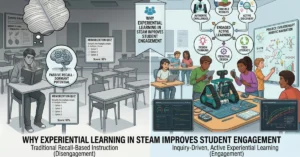
For decades, the standard classroom model involved a teacher at the front of the room delivering information to rows of students. This passive learning approach, often called “rote learning,” focuses on memorization and standardized testing. While it has its place, it frequently fails to engage students or equip them with the critical thinking skills needed for real-world application.
Disengagement and Passive Learning
Traditional methods can lead to student disengagement. When learning is confined to textbooks and lectures, it can feel abstract and disconnected from students’ lives. This passive environment can stifle curiosity and make it difficult for students to see the relevance of what they are learning, particularly in complex subjects like STEAM.
The Gap Between Theory and Practice
A significant drawback of traditional education is the gap it creates between theoretical knowledge and practical application. Students might be able to recite formulas or define scientific principles, but they often struggle to apply them. Hands-on STEAM kits bridge this gap, turning abstract concepts into tangible experiences and fostering a deeper, more intuitive understanding.
The Rise of Hands-on STEAM Kits in Education
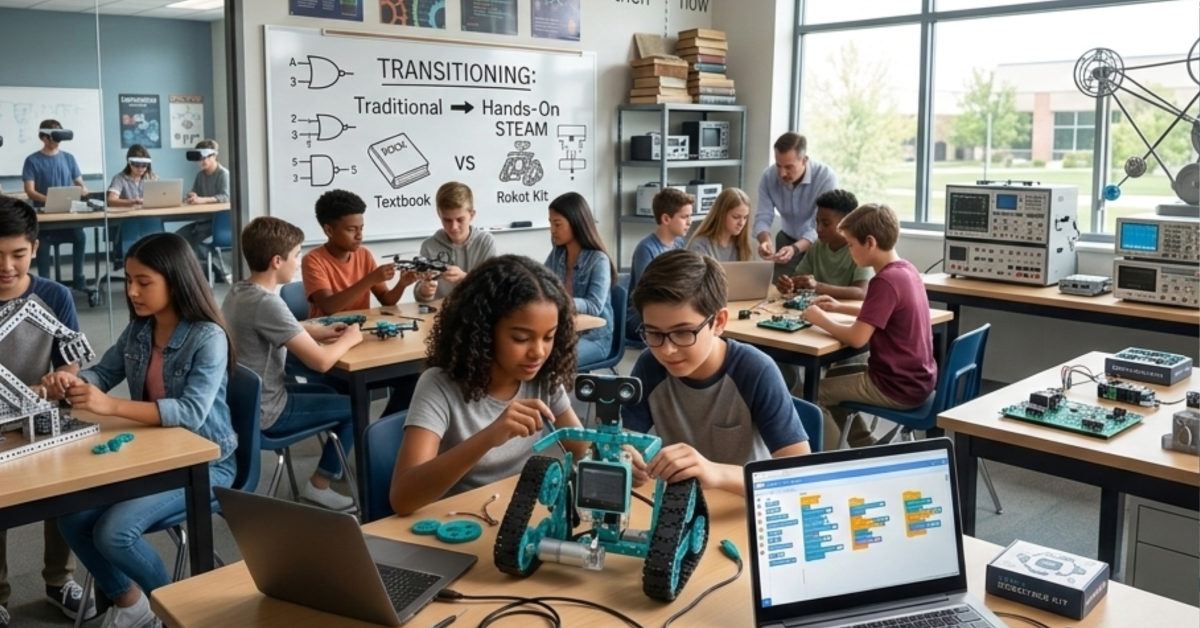
Hands-on STEAM kits are curated packages of materials and components that allow students to build, experiment, and solve problems. These kits are specifically designed as effective STEAM education tools that facilitate active learning in classrooms. Instead of just reading about a circuit, students can build one. Instead of just studying robotics, they can program a robot.
What are Hands-on STEAM Kits?
These educational tools range from simple circuit-building sets to complex robotics and coding kits. They provide a structured yet flexible framework for exploration. The core idea is to empower students to become active participants in their own education through project-based STEAM learning. Maker and Coder provides a range of kits designed for different age groups and skill levels, ensuring a progressive learning journey.
Key Benefits of Experiential Learning in Schools
Adopting practical learning methods offers numerous advantages that directly address the shortcomings of traditional models.
- Improved Engagement: Interactive activities capture students’ attention and make learning fun. When students are physically and mentally involved, their focus and motivation increase significantly.
- Enhanced Knowledge Retention: Studies consistently show that we remember more of what we do than what we hear or read. Experiential learning creates stronger neural pathways, leading to better long-term retention of information.
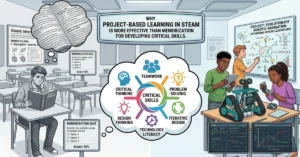
- Development of Critical Skills: Hands-on STEAM kits are not just about building things. They are about developing essential 21st-century skills like critical thinking, problem-solving, collaboration, and creativity.
Transforming the Classroom: Active Learning in Action
Integrating STEAM kits for schools fundamentally changes the classroom dynamic. The teacher’s role shifts from a lecturer to a facilitator, guiding students as they explore, question, and discover on their own. This student-centered approach fosters independence and a sense of ownership over the learning process.
Fostering a Collaborative Environment
Project-based STEAM learning naturally encourages teamwork. When students work together on a project, they learn to communicate effectively, delegate tasks, and resolve conflicts. These collaborative skills are highly valued in both higher education and the professional world, making them a crucial component of modern education.
Making Failure a Learning Opportunity
In traditional settings, failure is often seen as a negative outcome. With hands-on learning, it becomes a valuable part of the process. When a student’s robot doesn’t work or their circuit fails, they are encouraged to troubleshoot, analyze the problem, and try again. This iterative process builds resilience and teaches students that setbacks are opportunities for growth.
Global STEAM Education: A Worldwide Movement
The shift towards hands-on learning is not a localized phenomenon. It’s a global movement, with educators and policymakers recognizing the importance of practical skills in a competitive world economy. Hands-on learning worldwide is gaining momentum as countries seek to prepare their next generation of leaders and innovators.
International STEAM Programs and Their Impact
Many countries are investing heavily in global STEAM education initiatives. These programs often prioritize the distribution of resources like hands-on STEAM kits to ensure equitable access to quality education. They aim to cultivate a pipeline of talent ready to tackle global challenges, from climate change to technological advancement.
Preparing Students for a Global Workforce
The modern workforce is interconnected and technology-driven. Employers are looking for candidates who can not only perform tasks but also think critically and adapt to new challenges. Project-based STEAM learning directly develops these competencies, giving students a competitive edge in the global job market. Students who engage with these practical learning methods are better prepared for careers in engineering, software development, data science, and other high-demand fields.
Maker and Coder: Empowering the Next Generation
At Maker and Coder, we are dedicated to supporting this educational evolution. Our hands-on STEAM kits are carefully designed to make learning engaging, effective, and accessible. We believe that every student deserves the opportunity to learn by doing.
Our Approach to STEAM Education Tools
Our kits are more than just a collection of parts. They come with comprehensive curricula, step-by-step guides, and project ideas that align with educational standards. We focus on creating a seamless experience for both teachers and students, ensuring that the focus remains on learning and discovery.
Why Choose Maker and Coder?
- Curriculum Alignment: Our materials are developed to complement existing school curricula, making integration easy for educators.
- Scalable Solutions: We offer a variety of STEAM kits for schools suitable for different grade levels, from elementary to high school.
- Teacher Support: We provide training and resources to help teachers confidently implement active learning in classrooms.
The transition from traditional learning to hands-on methodologies is a critical step toward building a brighter future. By embracing tools like hands-on STEAM kits, schools are not just teaching subjects; they are cultivating the skills, mindset, and passion that will drive innovation for generations to come. This is the future of education, and it’s happening right now.
Frequently Asked Questions (FAQ) About Hands-on STEAM Kits
Hands-on STEAM kits are educational packages containing materials and guides for students to conduct science, technology, engineering, and math activities. They help students learn concepts through building, experimenting, and problem-solving rather than just reading or memorizing.
STEAM kits provide practical, project-based learning experiences that increase engagement and knowledge retention. They bridge the gap between theory and practice, making learning relevant and interactive for students.
Yes! Most STEAM kits are designed with age-appropriate projects, ensuring a wide range of options from elementary through high school. Brands like Maker and Coder offer tiered kits for different competencies and ages.
In the debate of traditional vs modern learning, STEAM kits stand out for fostering active, student-centered engagement, while traditional methods rely more on passive listening and memorization.
Students develop critical thinking, creativity, collaboration, and practical problem-solving skills, all essential for success in 21st-century careers.
Absolutely. Hands-on learning worldwide is supported through global STEAM education and international STEAM programs, making these approaches accessible to students across many countries.
Visit the Maker and Coder website to explore their wide range of STEAM kits for schools, find curriculum-aligned content, and get support for teachers and classrooms of any size.